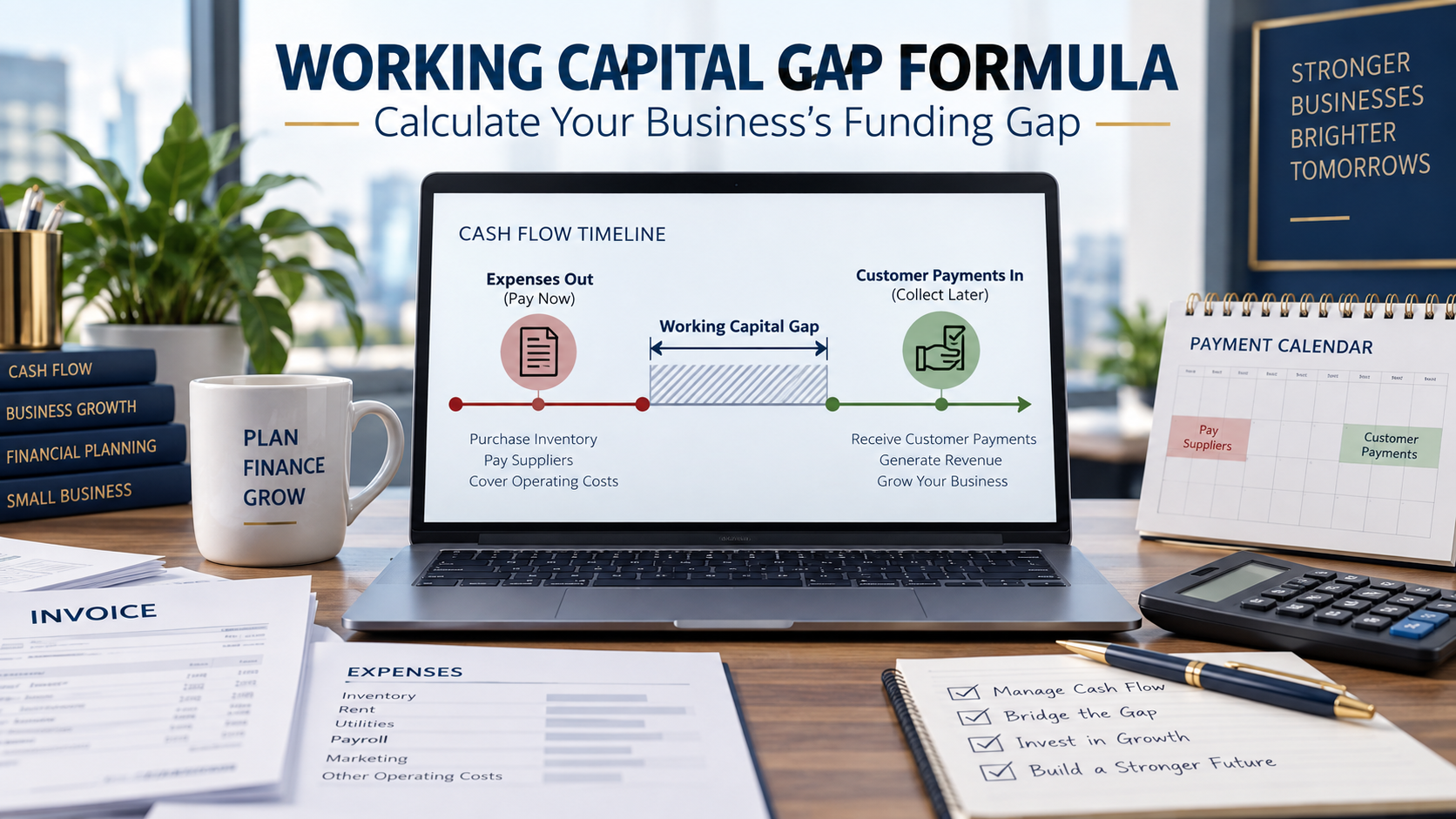
Running a restaurant requires more than generating enough sales to cover food costs. Restaurant owners often have to pay employees, suppliers, rent, utilities, insurance and other expenses before all of the cash needed to cover those obligations is comfortably available.
That is where restaurant working capital becomes important.
Working capital gives a restaurant the financial breathing room to handle everyday operating expenses, manage slower periods and deal with unexpected costs without disrupting normal operations.
But how much working capital does a restaurant actually need?
There is no single figure that works for every business. A small café has very different expenses from a full-service restaurant with dozens of employees. However, restaurant owners can estimate their working-capital needs by looking at monthly operating expenses, cash reserves, payment timing and the risks specific to their business.
What Is Restaurant Working Capital?
Working capital generally refers to the short-term financial resources available to operate a business.
A common accounting calculation is:
Working Capital = Current Assets − Current Liabilities
Current assets may include cash, bank balances, inventory and receivables expected to be converted into cash within a year.
Current liabilities can include supplier invoices, payroll obligations, taxes and other short-term debts.
For restaurant owners, however, working capital is often easier to think about in practical terms: Do you have enough accessible cash to keep the restaurant operating comfortably while paying expenses as they arise?
A restaurant can be profitable on paper and still experience periods when cash becomes tight. Understanding the difference between profitability and available cash is therefore an important part of financial planning.
For a deeper explanation, see our guide to calculating a working capital gap.
Why Restaurants Need Working Capital
Restaurants face a combination of frequent expenses and unpredictable revenue.
Food and beverage inventory must continually be replenished. Employees must be paid regardless of whether a particular week was busy. Rent, insurance and utilities continue even during slower periods.
A restaurant may also suddenly need to replace a refrigerator, repair cooking equipment or deal with an unexpected increase in ingredient costs.
Having sufficient working capital can help absorb these fluctuations.
Common uses of restaurant working capital include:
- Payroll and employee-related expenses
- Food and beverage inventory
- Rent and occupancy costs
- Utilities
- Insurance
- Equipment maintenance and repairs
- Marketing and promotions
- Delivery and packaging expenses
- Seasonal cash-flow shortages
- Unexpected operating expenses
Working capital can also help restaurant owners take advantage of opportunities, such as purchasing inventory at favorable prices, launching a new menu or expanding catering operations.
How Much Working Capital Should a Restaurant Have?
A useful starting point is to determine the restaurant’s average monthly operating expenses.
Suppose a restaurant has the following approximate monthly expenses:
| Expense | Monthly Cost |
|---|---|
| Payroll | $35,000 |
| Food and beverage inventory | $25,000 |
| Rent | $10,000 |
| Utilities | $4,000 |
| Insurance and other fixed expenses | $3,000 |
| Marketing, software and miscellaneous expenses | $3,000 |
| Total | $80,000 |
If the restaurant wants enough readily available capital to cover two months of these expenses, its target operating reserve would be approximately:
$80,000 × 2 = $160,000
That does not mean every restaurant needs $160,000 sitting untouched in a bank account. Instead, the calculation provides a useful benchmark for understanding the size of the restaurant’s potential cash requirement.
The appropriate reserve depends on the stability of revenue, the owner’s access to additional capital, upcoming expenses and the restaurant’s overall financial condition.
A Simple Restaurant Working Capital Formula
Restaurant owners can use a straightforward approach:
Average Monthly Operating Expenses × Desired Number of Months of Coverage = Target Operating Reserve
For example, if monthly expenses are $50,000 and the owner wants two months of coverage:
$50,000 × 2 = $100,000
If monthly expenses are $100,000 and the owner wants three months of coverage:
$100,000 × 3 = $300,000
This is not a universal rule or a guarantee of how much financing a restaurant should obtain. It is simply a planning tool.
Factors That Affect a Restaurant’s Working Capital Needs
1. Payroll
Labor is one of the largest recurring expenses for many restaurants. Unlike some expenses that can be delayed or reduced quickly, payroll has strict timing requirements.
A restaurant with a large staff may therefore need substantially more working capital than a small owner-operated café.
2. Food and Beverage Inventory
Restaurants continuously convert cash into inventory. Fresh ingredients also have a limited shelf life, which makes inventory management especially important.
Overstocking can tie up cash and increase waste, while insufficient inventory can affect service and sales. Tracking food costs and inventory turnover can therefore have a direct impact on working-capital requirements.
3. Rent and Occupancy Costs
Rent remains due regardless of how busy the restaurant is.
Restaurants in high-cost locations may therefore need larger cash reserves simply because their fixed monthly obligations are higher. Property taxes, common-area charges and other occupancy expenses should also be included when estimating monthly cash requirements.
4. Equipment Repairs
Commercial restaurant equipment is expensive, and failures rarely happen at convenient times.
Refrigeration systems, ovens, dishwashers, ventilation systems and other equipment may require urgent repairs or replacement. A major equipment failure can create both an unexpected expense and lost revenue if the restaurant cannot operate normally.
5. Seasonality
Many restaurants experience predictable changes in revenue.
A restaurant in a tourist destination might generate strong revenue during several months of the year and substantially less during the off-season. Other restaurants may depend heavily on holidays, outdoor dining, local events or business traffic.
Owners should therefore look beyond average annual revenue and identify their lowest-cash-flow periods.
Restaurant Profitability Is Not the Same as Cash Flow
This distinction is important.
A restaurant can report a profit while still experiencing a temporary cash shortage.
For example, a profitable restaurant might simultaneously need to pay a large insurance premium, replace kitchen equipment, increase inventory ahead of a busy period or make a quarterly tax payment.
These expenses can temporarily reduce available cash even when the underlying business remains healthy.
Build a 13-Week Cash-Flow Forecast
One of the most useful tools for managing restaurant working capital is a rolling 13-week cash-flow forecast.
Start with the restaurant’s current cash balance. Then estimate the cash expected to enter and leave the business each week.
Expected inflows might include in-store sales, online orders, catering revenue, delivery revenue and event income.
Expected outflows should include payroll, inventory purchases, rent, utilities, insurance, taxes, financing payments and planned equipment expenses.
The forecast can reveal potential cash shortages several weeks before they happen, giving the owner more time to adjust spending, negotiate payment terms or evaluate financing options.
How Restaurants Can Improve Working Capital
Reduce Inventory Waste
Monitor which ingredients are frequently discarded or overordered. Small reductions in food waste can improve cash flow considerably when repeated throughout the year.
Review Menu Profitability
High sales do not automatically mean high profits. Understanding the food cost and contribution margin of individual menu items can help restaurants promote stronger-performing products and reconsider items that consume cash without producing sufficient margin.
Negotiate Supplier Terms
Some suppliers may offer longer payment terms to established customers. Moving from immediate payment to 15-, 30- or longer-day terms can reduce pressure on short-term cash flow.
Monitor Labor Costs
Scheduling should reflect realistic customer demand. Overstaffing during slow periods can create unnecessary cash pressure, while understaffing can damage service and revenue.
Maintain a Cash Reserve
A reserve provides the restaurant with its first line of protection against unexpected expenses. Owners should deliberately build reserves rather than simply relying on whatever happens to remain in the operating account.
When Restaurant Financing May Help
Sometimes a restaurant’s cash requirement is larger than the amount that can reasonably be generated through operational improvements alone.
Financing may be considered for inventory, payroll, equipment, renovations, expansion, seasonal expenses, marketing or other short-term business needs.
Restaurant owners can review our restaurant business funding options to understand potential financing solutions.
Businesses primarily looking for flexible capital for everyday expenses can also learn more about working capital financing.
How Much Financing Should a Restaurant Request?
More financing is not automatically better. Borrowing more than the business needs can increase financing costs and create unnecessary repayment pressure.
Restaurant owners should first identify:
- The specific reason capital is required.
- The amount actually needed.
- How quickly the money will be used.
- How the financing will be repaid.
- Whether expected cash flow can comfortably support the obligation.
For example, if a restaurant identifies an expected $40,000 cash-flow shortage during an upcoming slow period, it may make more sense to evaluate financing around that requirement than automatically seeking $150,000 simply because a larger amount is available.
Restaurant Working Capital Example
Consider a restaurant generating $120,000 in average monthly revenue.
Its monthly operating expenses total approximately $100,000.
Normally, the business produces enough cash to meet its obligations. However, the owner knows that January and February are significantly slower and also expects a $20,000 equipment replacement during that period.
The owner creates a cash-flow forecast that shows the restaurant may experience a $45,000 shortfall during the slower period.
Instead of waiting until cash becomes tight, the owner can build additional reserves during stronger months, delay nonessential spending, negotiate supplier terms or evaluate financing before the shortage occurs.
The key advantage is planning ahead rather than reacting after cash has already become a problem.
Signs a Restaurant May Need More Working Capital
Warning signs can include regularly struggling to meet payroll, delaying supplier payments, using personal funds for routine business expenses, carrying unpaid bills from month to month or being unable to handle relatively modest unexpected repairs.
One difficult month does not necessarily indicate a serious financial problem. However, repeated cash shortages deserve attention.
If shortages occur even during strong sales periods, the underlying issue may be profitability, pricing or expenses rather than simply working-capital timing.
Frequently Asked Questions
What is working capital for a restaurant?
Restaurant working capital is the short-term financial capacity available to cover operating expenses such as payroll, food inventory, rent, utilities and other day-to-day costs.
How much working capital should a restaurant have?
There is no universal amount. A useful starting point is to calculate average monthly operating expenses and determine how many months of expenses the restaurant wants to be able to cover. Revenue stability, seasonality and upcoming expenses should also be considered.
Can a profitable restaurant have a working capital shortage?
Yes. Profitability and cash flow are different. A restaurant may be profitable over a period while still experiencing a temporary shortage of available cash because of the timing of expenses, equipment purchases, taxes or other obligations.
What can restaurant working capital be used for?
Depending on the financing arrangement, working capital may be used for expenses such as payroll, inventory, marketing, repairs, seasonal costs and other operating requirements.
How can restaurants reduce working capital pressure?
Better inventory management, reducing food waste, controlling labor costs, negotiating supplier terms, maintaining cash reserves and using a short-term cash-flow forecast can all help.
The Bottom Line
There is no single working-capital number that every restaurant should maintain.
The right amount depends on the restaurant’s operating expenses, revenue stability, seasonality, staffing, inventory requirements and exposure to unexpected costs.
The best place to start is with the numbers. Calculate average monthly operating expenses, build a rolling cash-flow forecast, identify upcoming large expenses and slower periods, and then determine whether existing cash reserves provide enough protection.
Restaurant owners who understand their future cash requirements can make financing decisions before a temporary shortage becomes an urgent problem.
If your restaurant needs additional capital for inventory, payroll, equipment, expansion or other business expenses, explore Rock Drive Business Capital’s restaurant business funding options to learn about potential financing solutions.
This article is for general informational purposes only and does not constitute financial, legal or accounting advice.