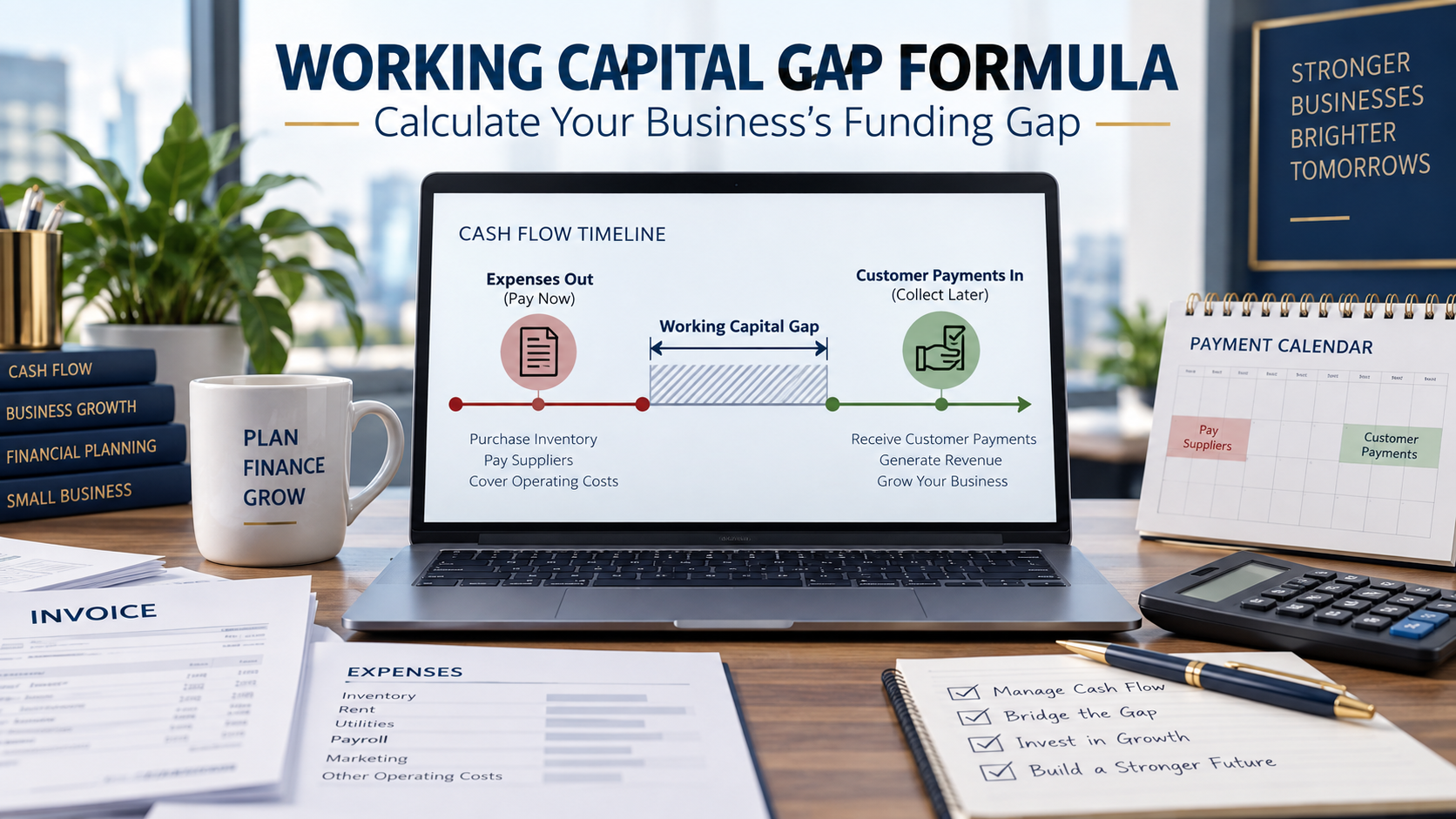
Retail businesses can look busy and profitable while still experiencing cash-flow pressure behind the scenes. Inventory needs to be purchased before it is sold, employees need to be paid on time, rent continues every month, and seasonal changes can create major swings in revenue.
That is why understanding retail working capital is so important. The right amount of working capital can help a retail business cover everyday expenses, keep inventory stocked, handle unexpected costs, and prepare for growth opportunities without disrupting normal operations.
There is no single amount of working capital that is right for every retailer. The amount a business needs depends on monthly expenses, inventory turnover, supplier terms, seasonality, growth plans, and how quickly sales convert into available cash.
What Is Working Capital in a Retail Business?
Working capital is generally calculated using a simple formula:
Current Assets – Current Liabilities = Working Capital
Current assets may include cash, accounts receivable, and inventory that can reasonably be converted into cash within the normal operating cycle.
Current liabilities may include supplier bills, payroll obligations, taxes, rent, short-term debt payments, and other expenses due in the near term.
Positive working capital usually means a business has more short-term assets than short-term obligations. However, retailers need to look beyond the basic formula because much of their current assets may be tied up in inventory.
A retailer may appear to have strong working capital on paper while still facing a cash shortage if a large amount of money is sitting in products that have not yet sold.
For a broader explanation of business working capital, see our working capital financing guide.
How Much Working Capital Should a Retail Business Have?
A useful starting point is to calculate how much cash the business needs to cover its normal operating expenses for several months.
For many retailers, maintaining enough accessible working capital to cover around two to three months of essential operating expenses can provide a useful cushion. However, the right amount varies significantly from one business to another.
A store with predictable year-round sales and fast inventory turnover may need a smaller reserve than a seasonal retailer that purchases large amounts of stock months before its busiest period.
Instead of relying on a fixed percentage or universal number, retail owners should calculate their own working-capital requirement based on their operating cycle.
1. Calculate Your Monthly Operating Expenses
Start by identifying the expenses the business must pay regardless of whether sales are strong or weak.
- Rent or lease payments
- Employee wages and payroll taxes
- Utilities
- Insurance
- Software and point-of-sale systems
- Marketing
- Shipping and delivery costs
- Supplier payments
- Loan or financing payments
- Taxes and professional fees
If a retailer has $40,000 in essential monthly expenses, a two-month operating cushion would equal approximately $80,000 before considering additional inventory purchases or expansion costs.
The goal is to understand how much cash the business needs to remain stable even if sales temporarily slow down.
2. Consider How Much Cash Is Tied Up in Inventory
Inventory is one of the largest working-capital requirements for many retail businesses.
A retailer may have to purchase products weeks or months before receiving money from customers. The longer products remain on shelves or in warehouses, the longer that cash remains tied up.
Retailers should regularly monitor:
- Inventory turnover
- Slow-moving products
- Seasonal stock
- Supplier minimum-order requirements
- Lead times
- Discounting and clearance activity
Improving inventory turnover can reduce the amount of working capital a retailer needs because cash moves from inventory back into available funds more quickly.
If inventory needs are creating short-term pressure, businesses can also explore available retail business funding options.
3. Account for Seasonal Sales Changes
Seasonality can dramatically affect a retailer’s working-capital needs.
A business that generates a large percentage of annual revenue during the holiday season may need to purchase inventory during the summer or early autumn. That creates a period where cash is leaving the business well before sales arrive.
Retailers should create a rolling cash-flow forecast that includes expected:
- Sales
- Inventory purchases
- Payroll
- Rent
- Supplier payments
- Marketing expenses
- Taxes
Looking several weeks or months ahead makes it easier to spot a funding shortfall before it becomes urgent.
For a deeper explanation of these timing issues, see our guide to the working capital gap.
4. Review Supplier Payment Terms
Supplier terms can have a major effect on working capital.
If suppliers require payment immediately, a retailer must fund inventory purchases long before the products may be sold.
On the other hand, terms such as net 30 or net 60 can provide additional time for inventory to generate revenue before supplier invoices become due.
Retailers with strong supplier relationships may be able to negotiate improved terms as purchasing volume increases.
Even a small improvement in supplier payment timing can reduce pressure on day-to-day cash flow.
5. Factor in Growth
Growth often increases working-capital requirements before it increases available cash.
For example, opening another location may require:
- A security deposit
- Initial inventory
- Fixtures and equipment
- New employees
- Marketing
- Additional insurance
- Higher supplier orders
A rapidly growing retailer can therefore be profitable while still experiencing significant cash-flow pressure.
Before expanding, owners should estimate how much additional cash the new activity will require and how long it may take before the expansion begins generating positive cash flow.
Businesses planning a larger expansion may also want to review business term loan options alongside other forms of business financing.
6. Prepare for Unexpected Expenses
Retail businesses can encounter costs that are difficult to predict.
These may include:
- Equipment breakdowns
- Damaged or unsellable inventory
- Unexpected repairs
- Supplier price increases
- Higher shipping costs
- Temporary reductions in sales
A working-capital reserve gives the business more flexibility when these situations occur.
A Simple Retail Working Capital Example
Consider a retail business with the following monthly obligations:
- Rent and utilities: $10,000
- Payroll: $20,000
- Inventory purchases: $25,000
- Marketing and software: $5,000
- Other expenses: $5,000
Total monthly cash requirements are approximately $65,000.
If the owner wants a two-month operating cushion, that would suggest approximately $130,000 in accessible working capital.
However, the actual amount could be higher if the business is preparing for a major seasonal inventory purchase, opening a new location, or investing in additional equipment.
The important point is that working capital should be based on the retailer’s actual cash-flow cycle rather than an arbitrary number.
Signs a Retail Business May Need More Working Capital
Several warning signs can indicate that a retailer’s existing working capital is becoming too tight.
- Frequently delaying supplier payments
- Struggling to purchase enough inventory
- Using funds intended for taxes or payroll to cover other expenses
- Missing supplier discounts because cash is unavailable
- Reducing marketing because of short-term cash pressure
- Being unable to take advantage of bulk inventory pricing
- Experiencing repeated cash shortages despite healthy sales
These issues do not necessarily mean the business is unprofitable. They can simply mean the timing of incoming and outgoing cash is poorly matched.
Ways Retail Businesses Can Improve Working Capital
Improve Inventory Turnover
Identify products that are selling slowly and avoid repeatedly tying cash up in inventory with weak demand.
Negotiate Better Supplier Terms
Longer payment terms may allow more time to sell inventory before supplier invoices become due.
Forecast Cash Flow Regularly
A rolling 8- to 13-week cash-flow forecast can help management identify upcoming shortages early enough to take action.
Reduce Unnecessary Operating Costs
Regularly review subscriptions, supplier contracts, shipping expenses, and other recurring costs.
Maintain an Emergency Reserve
Keeping accessible cash separate from everyday operating funds can help a business handle unexpected expenses without disrupting normal operations.
Retail Funding Options for Working Capital
When internal cash reserves are not enough, retailers may consider outside funding to support inventory purchases, seasonal expenses, expansion, or temporary cash-flow needs.
Depending on the business’s revenue, time in business, credit profile, and intended use of funds, possible options may include:
- Business lines of credit
- Business term financing
- Revenue-based financing
- Equipment financing
- Working capital financing
The most appropriate option depends on the retailer’s cash-flow needs, repayment capacity, and how the funds will be used.
To explore options specific to the sector, visit our Retail Business Funding page.
How Much Retail Funding Might a Business Qualify For?
The amount of financing available depends on several factors, including revenue, cash flow, time in business, credit profile, existing obligations, and the financing product being considered.
Rather than borrowing the largest amount available, business owners should determine how much capital is actually required and how repayment will affect future cash flow.
For more information, read our guide explaining how much business funding a company may qualify for.
Frequently Asked Questions
What is a good amount of working capital for a retail business?
There is no universal amount. Retailers should consider monthly operating expenses, inventory requirements, seasonality, supplier terms, and expected growth. Maintaining several months of essential expenses as accessible working capital may provide a useful cushion for some businesses.
Why do retail businesses need so much working capital?
Retailers often pay for inventory before receiving revenue from selling it. Cash may therefore remain tied up in products for weeks or months while rent, payroll, marketing, and other expenses continue.
Can a profitable retail business still have cash-flow problems?
Yes. Profitability and cash flow are different. A retailer can show a profit while still experiencing a shortage of available cash because money is tied up in inventory, receivables, or expansion.
What can working capital be used for in retail?
Depending on the financing arrangement, working capital may be used for inventory, payroll, rent, marketing, supplier payments, seasonal expenses, expansion, and other ordinary business needs.
How can retailers reduce their working-capital needs?
Improving inventory turnover, negotiating better supplier terms, controlling expenses, forecasting cash flow, and maintaining appropriate reserves can all help reduce working-capital pressure.
Final Thoughts
The right amount of working capital gives a retail business room to operate without constantly reacting to short-term cash shortages.
The goal is not simply to hold as much cash as possible. It is to understand the business’s operating cycle, anticipate upcoming expenses, maintain appropriate reserves, and make sure enough capital is available when inventory, payroll, supplier bills, or growth opportunities require it.
If your retail business is experiencing a temporary cash-flow gap or preparing for growth, Rock Drive Business Capital can help you explore available retail business funding options.