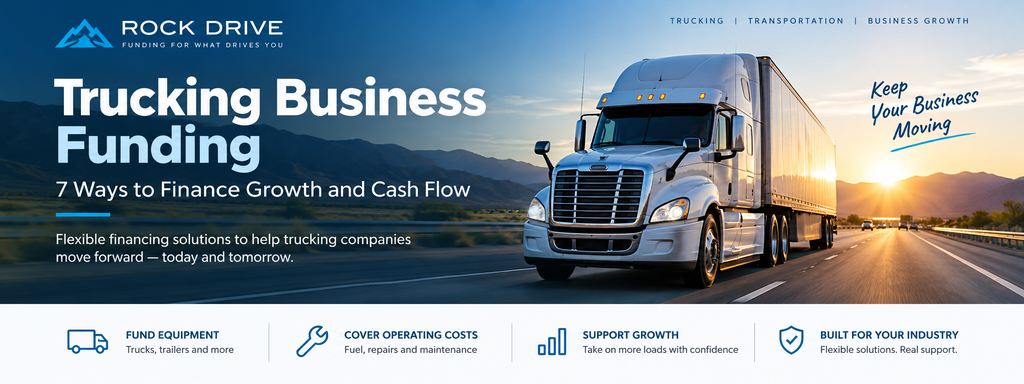
Running a trucking company can require substantial amounts of working capital. Even when trucks are busy and revenue is growing, there can be a significant gap between paying for fuel, repairs, insurance, payroll and equipment and actually receiving payment from customers.
That makes access to capital an important part of managing many transportation businesses.
The right trucking business funding can help a company handle short-term cash-flow needs, repair or replace equipment, take on additional contracts and invest in growth without relying entirely on cash reserves.
There isn’t one financing option that works for every trucking business. The right solution depends on what the money will be used for, how quickly it is needed, the company’s financial profile and how the business generates revenue.
Here are seven funding options trucking business owners can consider.
Why Trucking Companies Often Need Additional Funding
Trucking companies face a combination of high operating costs and sometimes slow customer payment cycles.
A business may need to pay expenses such as:
- Fuel
- Driver payroll
- Truck repairs
- Tires and maintenance
- Commercial insurance
- Permits and licensing
- Trailers and equipment
- Dispatch and technology costs
These bills don’t necessarily wait until customers pay their invoices.
A company can therefore be profitable on paper while still experiencing periods of tight cash flow.
This is one reason having access to appropriate working capital financing can be valuable for transportation businesses. Rather than delaying necessary expenses or turning down work, financing may provide additional liquidity when the business needs it.
1. Business Lines of Credit
A business line of credit can be useful when a trucking company has recurring or unpredictable expenses.
Instead of receiving one lump sum for a specific project, the business receives access to a predetermined credit limit. It can generally draw funds as needed, subject to the terms of the financing arrangement.
This can make a line of credit useful for expenses such as fuel, unexpected repairs, insurance payments or temporary cash-flow gaps.
For example, a trucking company might have several invoices due from customers but need to repair a truck immediately. Access to available credit could allow the repair to be completed without waiting for those invoices to be paid.
Lines of credit may be particularly useful for businesses that want ongoing access to capital rather than financing a single large purchase.
2. Equipment Financing
Trucks and trailers can represent some of the largest investments a transportation company makes.
Equipment financing is designed specifically to help businesses acquire equipment and may be appropriate when purchasing or replacing:
- Semi-trucks
- Box trucks
- Trailers
- Refrigerated equipment
- Specialized transportation equipment
- Other business-related machinery
Because the financing is tied to a particular asset, equipment financing is different from general working-capital financing.
For a growing trucking business, financing equipment can also preserve cash that might otherwise have been used to purchase the asset outright.
That available cash can then remain in the business for fuel, payroll, repairs and other operating expenses.
3. Business Term Loans
A business term loan provides a lump sum that is repaid over an agreed period according to the financing terms.
Term financing can make sense when the business has a clearly defined use for the capital.
Examples might include expanding operations, purchasing equipment, opening a new location or making a substantial investment in the company.
Compared with financing designed for short-term working-capital needs, a term loan may be more appropriate when the investment is expected to benefit the business over a longer period.
Business owners should consider the repayment schedule carefully and make sure it fits the company’s expected cash flow.
4. Working Capital Financing
Not every funding requirement involves buying another truck.
Sometimes the challenge is simply keeping day-to-day operations moving while waiting for revenue to arrive.
Working-capital financing can provide funds for ordinary operating expenses such as fuel, payroll, repairs, insurance and supplier payments.
Consider a trucking company that wins a large new contract.
The contract could significantly increase revenue, but servicing it may require more fuel, additional drivers and higher maintenance expenses before the customer makes its first payment.
In situations like this, access to working capital can help bridge the timing difference between expenses and incoming revenue.
5. Revenue-Based Financing
Revenue-based financing provides capital with repayment generally structured around the business’s revenue or sales.
This can make it an option worth considering for established trucking companies with consistent revenue that need capital relatively quickly.
Possible uses might include:
- Repairs
- Fuel
- Payroll
- Expansion
- Marketing
- Equipment-related expenses
- Short-term operating requirements
Because revenue-based financing works differently from a traditional term loan, business owners should understand the total cost, payment structure and expected effect on cash flow before proceeding.
The key question isn’t simply how quickly funding can be obtained. It is whether the repayment structure makes sense for the company’s revenue and operating margins.
6. Invoice Financing or Factoring
Trucking businesses can sometimes wait weeks for customers to pay invoices.
Invoice financing or factoring may help turn eligible outstanding invoices into working capital sooner.
Instead of waiting for the full customer payment cycle, the business can potentially access part of the invoice value earlier, depending on the provider and arrangement.
This can be particularly relevant to transportation companies that work with established shippers, brokers or commercial customers with longer payment terms.
However, factoring and invoice financing have their own fee structures and requirements, so trucking companies should compare the overall cost with other available financing options.
7. SBA and Traditional Bank Financing
Established trucking companies with strong financial profiles may also consider conventional bank financing or financing available through U.S. Small Business Administration programs.
These options can sometimes provide attractive terms, particularly for longer-term investments.
However, they may involve more documentation and a longer approval process than some alternative business financing products.
For a company planning a major investment months in advance, that may not be a problem.
For a trucking business dealing with an immediate repair or short-term cash-flow requirement, speed may be a more important consideration.
The best option depends on the company’s circumstances.
What Can Trucking Business Funding Be Used For?
The appropriate use of funding depends on the financing product and lender requirements, but transportation businesses commonly seek capital for several reasons.
Truck and Trailer Purchases
Growing fleets may require additional tractors, trailers or specialized equipment.
Repairs and Maintenance
Major engine, transmission or other mechanical repairs can create substantial unexpected expenses.
Fuel
Fuel is one of the most significant ongoing expenses for many trucking businesses, and higher fuel costs can quickly affect working capital.
Payroll
Companies may need to pay drivers and other employees before receiving payment from customers.
Insurance
Commercial trucking insurance can represent a significant business expense.
Taking On New Contracts
Growth itself requires capital. A larger contract may require additional drivers, equipment and fuel before producing additional cash flow.
Expanding the Fleet
A business with consistent demand may use financing to increase capacity and take on additional loads.
For a closer look at day-to-day operating requirements, read our guide explaining how much working capital a trucking company may need.
How Much Funding Could a Trucking Company Qualify For?
There isn’t one standard amount available to every trucking business.
Funding eligibility can depend on factors including:
- Monthly or annual revenue
- Time in business
- Existing business obligations
- Cash flow
- Credit profile
- Type of financing requested
- Intended use of funds
A newer owner-operator may have a very different funding profile from an established transportation company operating a large fleet.
Rather than assuming a particular financing product is the best solution, it makes sense to compare the available options against the actual needs and financial position of the business.
Read How Much Business Funding Can You Qualify For? for a more detailed explanation of the factors that can influence business funding eligibility.
How to Choose the Right Funding Option
Start with the purpose of the financing.
If the company needs another truck, equipment financing may make more sense than using general-purpose working capital.
If the problem is recurring cash-flow gaps, a business line of credit could provide more flexibility.
If the company needs a substantial amount for a planned expansion, a term loan may be more appropriate.
And if the business generates consistent revenue but needs access to capital for shorter-term requirements, working-capital or revenue-based financing may be worth exploring.
Business owners should compare more than the amount being offered.
- Total financing cost
- Payment amount
- Payment frequency
- Repayment period
- Funding speed
- Eligibility requirements
- Effect on cash flow
- Any fees or other obligations
The cheapest-looking option isn’t necessarily the best option if its repayment structure puts too much pressure on the company’s working capital.
Funding Growth Without Creating a Cash-Flow Problem
One of the interesting challenges in trucking is that growth can actually increase the need for cash.
Imagine a company operating five trucks that wins enough new business to justify adding another two.
That’s good news.
But additional revenue may require the company to spend money first.
There may be equipment deposits, driver payroll, insurance, fuel, maintenance and other expenses before the new customers’ invoices are paid.
This creates a working-capital gap.
Appropriate financing can help bridge that gap, but businesses should avoid borrowing simply because capital is available.
Funding should have a clear purpose and the expected benefit should justify its cost.
Frequently Asked Questions About Trucking Business Funding
Can a trucking company get business funding?
Yes. Trucking and transportation companies may have access to several forms of business financing depending on factors such as revenue, time in business, credit profile and the type of funding requested.
What type of funding is best for a trucking company?
There isn’t one best option for every company. Equipment financing may suit a truck purchase, while a line of credit or working-capital financing may be more appropriate for operating expenses. Longer-term investments may be better suited to term financing.
Can trucking business funding be used for repairs?
Depending on the financing product and its permitted uses, business funding may be available for truck repairs and maintenance. Companies should confirm permitted uses before accepting financing.
Can trucking companies get funding for fuel?
Working-capital financing and certain other forms of business financing may be used for operating expenses such as fuel, subject to the financing terms.
How quickly can a trucking business receive funding?
Funding times vary considerably by financing product and provider. Some alternative financing options can move faster than traditional bank financing, while products requiring extensive documentation may take longer.
Can an owner-operator qualify for business financing?
Potentially. Qualification depends on the lender or financing provider and factors such as revenue, time in business, credit and overall financial profile.
Explore Funding Options for Your Trucking Business
Trucking businesses don’t all have the same financing requirements.
One company may need to replace a truck. Another may need working capital while waiting for invoices to be paid. A growing fleet may need capital to hire drivers and take on additional routes.
Rock Drive Business Capital helps business owners explore financing solutions based on their circumstances and business needs.
Learn more about financing for transportation businesses, review our Financing Options, or see How It Works to understand the next steps.
Ready to explore your options? Check your business funding options with Rock Drive Business Capital.
Funding is subject to approval and applicable terms. Financing products, amounts, costs and eligibility vary. Information provided here is for general educational purposes and is not a guarantee of financing.